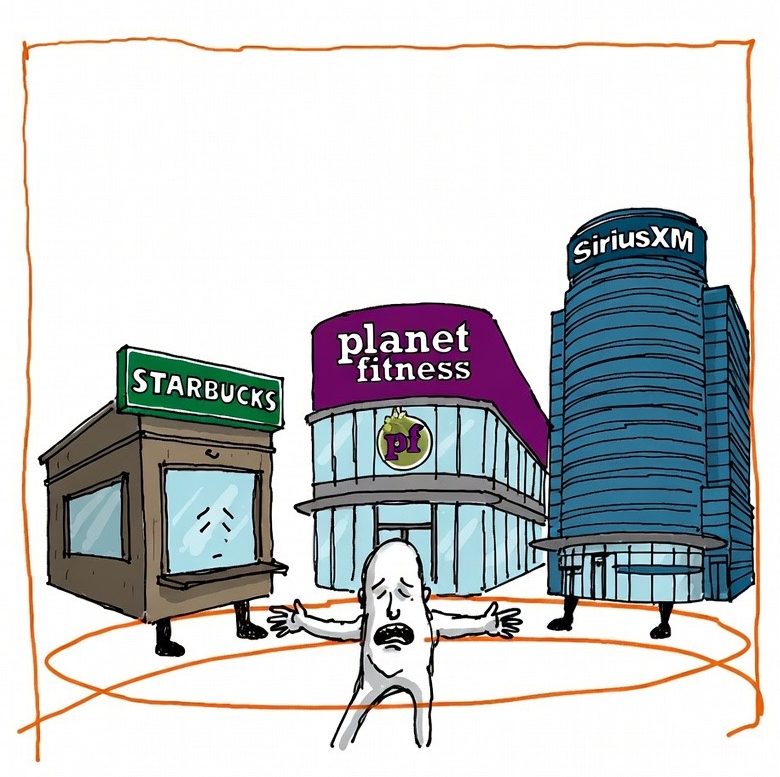
Consider the physical mechanics of a modern commercial transaction. You walk through the automatic glass doors of a mid-tier lifestyle retailer. Before your foot has fully settled onto the polished concrete floor, a proximity sensor triggers not just a chime, but a human response. A floor associate, trained to within an inch of their life by a corporate manual on customer delight, pivots. They make deliberate eye contact. They deploy a smile that requires exactly fourteen facial muscles, and they ask what you are up to this weekend.
To the executive board that designed this interaction, it is a triumph of hospitality. It is a relationship being built.
To the twenty-two-year-old walking through the door, it is a hostage situation.
For the last century, Western commerce has operated on a deeply ingrained extrovert delusion. The assumption, passed down through business schools and cemented in marketing lore, is that warmth, eye contact, and conversational friction are the bedrock of brand loyalty. If a customer is greeted, they feel seen. If they are seen, they will buy.
But observe the modern consumer in their natural habitat. They move through the world with AirPods set strictly to active noise cancellation. It is a sociological shield. Gen Z and the emerging Gen Alpha are not inherently antisocial, but they are surviving a daily digital siege. From the moment they wake up, their attention is aggressively mined by algorithms. They process thousands of micro-transactions of emotional and cognitive labor before they even leave their bedrooms, navigating push notifications, targeted advertisements disguised as organic content, and the relentless, scrolling demands of parasocial networks.
By the time they actually need to buy a cup of coffee or a pair of socks, their cognitive budget is entirely depleted.
When a brand insists on a high-touch experience, it is entirely misreading the room. The Brian Niccol-fatigued barista asking about your day, the pop-up modal begging you to join a newsletter community, the forced banter of a customer service representative—none of this registers as service. It registers as an unauthorized withdrawal from a bank account that is already overdrawn. It is an interruption.
We have to recognize the physiological reality of the 2026 consumer. They are saturated. When they approach the checkout counter, they do not want to be delighted. They want to be processed. They want the friction of human engagement removed entirely so they can retreat back into the quiet autonomy of their own minds.
To understand the arrogance of the modern brand, you have to look at the language we use in corporate strategy rooms. We talk about nurturing relationships. We speak of community building and brand love.
Brands have collectively decided they are the main character in the consumer’s life. A software company wants to be a thought leader on work-life balance. A fast-food chain wants to have a sassy, chaotic-neutral personality on social media. A manufacturer of antiperspirant demands that you join their movement for global self-esteem.
It is exhausting. You sell aluminum zirconium tetrachlorohydrex glycine in a plastic stick. Just keep me dry.
This insistence on a relationship assumes that the consumer has infinite emotional bandwidth to distribute among the corporations that supply their basic needs. They do not. The younger the cohort, the more aggressively they reject this performative authenticity. They have grown up entirely fluent in the mechanics of marketing. They can spot a focus-grouped casual tone from fifty yards away. When a brand tries to sound like a best friend, it immediately triggers the uncanny valley of corporate deceit. They know you are not their friend. They know you are a margin-driven entity. Pretending otherwise is just insulting their intelligence.
The pendulum has swung entirely away from connection and settled firmly on utility.
This brings us to the my core thesis: The highest form of respect a brand can show today is distance.
We are witnessing the rise of the Autonomy Premium. Silence is no longer just a byproduct of efficiency; it is a luxury good. If you look at where younger consumers willingly spend their money, it is heavily skewed toward environments that require zero human interaction. They will pay an upcharge to order ahead on an app just to avoid the verbal exchange at the register. They will abandon a digital shopping cart entirely if checking out requires creating an account and verifying an email address.
A forced interaction, whether it is a mandatory phone call to cancel a subscription, or a hovering sales rep explaining the ethical sourcing of a sweater, is viewed as a systemic failure of brand architecture.
The brands that will survive the next decade are the ones that accept a bruising truth: your customers do not care about you. They care about what you can do for them. The goal is no longer to intercept the consumer and force a connection. The goal is to build an invisible, flawless system that anticipates their needs, executes the transaction, and then gets the hell out of their way.
To build a brand that leaves people alone requires an entirely different kind of structural engineering. The industry calls this service design, but traditionally, that discipline has been weaponized to create more service. More touchpoints. More interventions. More opportunities for a brand to assert its personality. Younger generations demand the exact opposite: the deliberate, precise construction of a vacuum.
Building this vacuum relies on replacing performative service with predictive empathy.
Consider the mechanics of the modern hotel check-in. The performative model demands a human standing behind a marble slab. It requires a verbal exchange of reservation numbers, an explanation of the breakfast hours, and the physical handover of a plastic key card. It is a ritual of manufactured hospitality.
The predictive model, however, operates entirely in the shadows. It uses behavioral data to pre-set the room’s thermostat to 68 degrees. It issues a digital key to a mobile device before the flight even lands, bypassing the lobby entirely. It ensures the Wi-Fi authenticates the moment the door opens. Performative service asks, “How is everything with your stay so far?” Predictive empathy ensures the question never needs to be asked, because the environment has already anticipated the friction and removed it.
For younger cohorts, a user interface is a defensive perimeter.
Self-checkout kiosks, asynchronous messaging, and exhaustive FAQ pages are deployed by the consumer as shields against human interaction. They are seeking self-service as a form of self-preservation. Therefore, when a digital interface fails (when an app crashes, a cancellation button is hidden, or an account is locked), it is not merely a technical glitch. It is a breach of the perimeter.
When a consumer is forced to dial a 1-800 number or approach a service desk because the digital architecture failed them, they are not arriving at that interaction looking for a relationship. They are arriving resentful. A phone call to customer support is no longer viewed as a channel for resolution. It is a symptom of structural failure.
Auditing a brand for this kind of silence is brutal work. It requires taking a scalpel to the traditional customer journey map and systematically excising every engagement opportunity.
Marketers have spent decades trying to build frictionless onboarding, but they almost always construct highly friction-filled offboarding. They force a conversation to downgrade a software tier. They mandate a phone call to cancel a gym membership. They disguise this friction as retention strategy, believing that a human representative might save the account. But to the hyper-stimulated consumer, this is simply hostility.
The future is agnostic to the direction of the transaction. If a customer has to speak to a human to give you money, your system is inefficient. If they have to speak to a human to stop giving you money, your system is coercive. The architecture of a modern brand must be built to facilitate both acquisition and abandonment with absolute, mechanical silence.
The market always accurately prices what is scarce. Today, cognitive peace is the rarest commodity in the consumer ecosystem, and the mechanisms for monetizing it are already operating at scale. Silence is a premium product tier.
Consider the literal monetization of the void. When Uber introduced the “Quiet Preferred” option, they restricted it to their premium Black and SUV tiers. They recognized that the guarantee of a silent ride, the explicit, contractual agreement that the driver will not attempt to engage in small talk, was a feature users would willingly pay an upcharge to secure. In the personal grooming sector, a growing contingent of salons now offer silent appointments. The client receives the same physical service, but the obligatory, exhausting performance of chair banter is entirely removed.
The absence of interaction becomes the value proposition.
This shift is equally visible in the hospitality sector’s pivot toward dark kitchens and ghost hotels. Consumers are routinely paying premium delivery fees for food originating from windowless industrial parks precisely because it strips away the friction of the restaurant experience. They do not want the ambiance; they want the caloric utility delivered to their door with zero human contact.
Conversely, when brands refuse to adapt to this economic reality, the financial bleed is immediate and quantifiable. The modern consumer enforces a strict friction tax on aggressive marketing.
When an e-commerce platform forces a user to create an account rather than offering a frictionless guest checkout, it is asserting its desire for a long-term relationship over the user’s desire for a quick transaction. The result is a mathematically predictable spike in cart abandonment. When a subscription service mandates a phone call to a retention specialist in order to cancel, they are not saving the account; they are burning the bridge. The consumer will sit through the agonizing hold music, execute the cancellation, and then actively weaponize their network against the brand, leaving scathing reviews about the hostility of the offboarding process.
In this landscape, efficiency replaces warmth as the ultimate aesthetic. Trust is no longer built through conversational rapport. Trust is built when a digital interface is so ruthlessly intuitive that it makes the underlying corporation feel invisible. If a product works perfectly, requires zero onboarding, and never asks for a review, it wins. Cold, mechanical competence is the new visual and operational language of brand loyalty.
We are entering a period of brutal pragmatism. The era of the parasocial brand and the decade where corporations convinced themselves they were our therapists, our communities, and our best friends is collapsing under the weight of consumer exhaustion.
The title of this blog, Pragmatic Revival, is not a call for brands to become antagonistic. It is a demand for a return to reality. It requires stripping the manufactured soul out of the modern brand to expose the raw, mechanical truth of human desire. We must accept that we are not saving the world, and we are not elevating the human spirit. We are executing a transaction.
This is the baseline of utility. If you sell a mattress, you are selling the mechanical alignment of the spine during the sleep cycle. You are not selling a wellness journey. If you sell enterprise software, you are selling the recapturing of lost labor hours. You are not selling workplace empowerment. When a brand strips away the performative fluff, it liberates the consumer from the exhausting obligation to care.
To leave your customers the hell alone is the ultimate flex. It requires an unshakable confidence in the utility of the product. The most powerful brands of the next decade will not be the loudest, the most culturally relevant, or the most engaging. They will be the ones that function so flawlessly, so quietly, and so efficiently that they dissolve entirely into the background of our lives.
They will do exactly what they promised to do, and then they will disappear.
 Pragmatic Revival
Leave a comment