
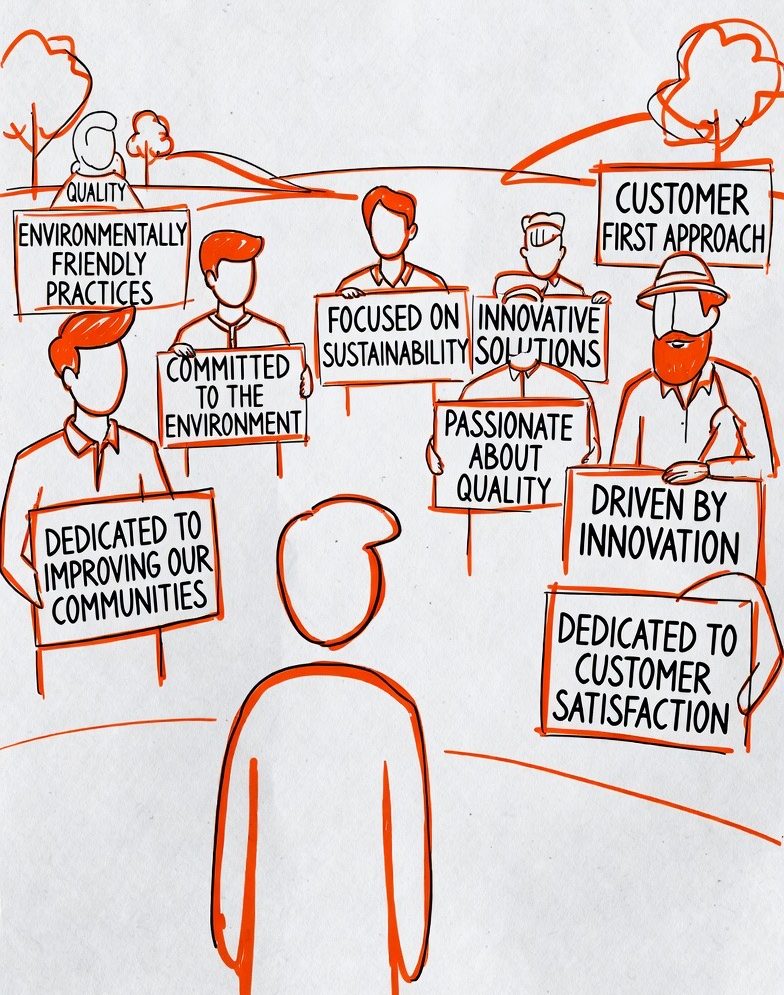
For fifteen years, Simon Sinek’s Start With Why has been the undisputed gospel of the world of corporate strategy. It was the perfect philosophy for a specific moment in history; a moment of economic abundance, cheap capital, and boundless optimism. It told us that commerce didn’t have to be dirty. It told us that selling software or sneakers could be a moral act. It allowed creative directors and CEOs to look in the mirror and see missionaries.
The service is over. The house lights are up. And in the harsh glare of 2026, Simon Sinek’s Golden Circle looks less like a compass and more like a relic of a bygone economy.
To understand why the “Why” is dying, you have to look at the financial hallucination that birthed it. Purpose-driven marketing was the ultimate Zero-Interest Rate Phenomenon (ZIRP)—a luxury belief system bankrolled by a decade of free money. From roughly 2010 to 2021, the global market was awash in venture capital and blind optimism. When capital costs nothing, a business doesn’t need immediate profitability. It just needs a compelling story.
Under those conditions, the “What”—the actual product, its margins, its core utility—faded into the background. Specs were for accountants. The “Why” was where the valuation multiplier lived. We witnessed the rise of the direct-to-consumer unicorn: companies that were 10 percent product and 90 percent narrative. We bought toothbrushes that promised to disrupt oral hygiene, luggage that positioned itself as a travel revolution, and mattresses serving as vehicles for morning wellness.
Founders were no longer starting businesses; they were launching movements. The pitch deck always featured those concentric circles, promising that a nailed belief system would let the product sell itself. For a while, it actually worked, largely because the consumer inhabited the exact same hallucination.
Flush with disposable income and a general sense of future prosperity, shoppers had the luxury of buying identity. You could afford to care about a brand’s geopolitical stance. You could swallow a 40 percent premium on a mission-driven detergent because the transaction made you feel like a participant in a better world. People were shopping at the absolute peak of Maslow’s pyramid.
But ideologies run in cycles, and the wheel has turned.
Walk down a grocery aisle today. Watch a shopper staring down the detergent options. They aren’t looking for Downy’s big Bolshevik pivot; they want the price per ounce. They pick up the bottle and read the back panel with forensic scrutiny. The question isn’t, “What does this corporation believe?” It’s, “Is this going to get the stain out, and why does it cost twenty-two dollars?”
We are living through a Great Sobering. Post-pandemic inflation, stagnant real wages, and the creeping nihilism of a rot economy have rewired the consumer brain. The optimism that fueled the “Start With Why” era has evaporated, leaving the average buyer operating strictly at the level of physiological and safety needs. In a survival economy, purpose is a distraction. The “Why” is a luxury. The “What” is a hard necessity.
By ignoring the “What” for a decade—treating specs as cold and features as commodities—we engineered a massive utility deficit. Brands grew bloated with storytelling while their core products atrophied. We effectively taught the public that “brand” is a synonym for “fluff,” and that any company leading with its values is probably just trying to distract you from the price tag. Sinek argued that people don’t buy what you do; they buy why you do it. That premise is objectively false.
When a migraine hits, I don’t buy Tylenol because I believe in Johnson & Johnson’s corporate mission to change humanity’s health trajectory. I buy it because it contains 500 milligrams of acetaminophen, which inhibits prostaglandin production in my brain. I am buying the “What.” If I need a cloud storage provider, I couldn’t care less about the founder’s origin story. I care about their uptime SLA, encryption standards, and cost per terabyte.
Leading with “Why” evolved into a crutch for lazy strategy. Writing a sweeping manifesto is vastly easier than engineering a superior product. Talking about community requires less effort than fixing a broken supply chain. Filming a tear-jerking commercial is far simpler than lowering a price point without compromising quality. For ten years, the market rewarded rhetoric. The future will reward reality.
Strip away the marketing dogma of the 2010s, and an uncomfortable truth emerges: many purpose-driven brands are entirely hollow. They are narrative shells wrapped around mediocre commodities. Consumers, sharpened by economic pressure and exhausted by corporate hypocrisy, have learned to tap on those shells and listen for the echo.
The existential threat to a modern brand isn’t a lack of noble purpose. It’s forgetting how to be useful. Before you can change the world, you have to be able to keep the Wi-Fi connected during a storm, or simply deliver a package on the promised day. The market is awake now. It’s time to stop looking at the center of the Golden Circle and focus on the edges, where the rubber actually meets the road.
To truly understand the insolence of the “Start With Why” movement, look at where it breeds. Not in the hardware store or the mechanic’s bay, but in the rarefied air of lifestyle brands—specifically, the apparel sector, where the gap between product utility and marketing palaver is widest.
Take the recent launch of Tiger Woods’ new venture, Sun Day Red. What we have here is a line of polyester blends and quarter-zips. A pragmatic assessment of the “What” reveals a perfectly adequate, moisture-wicking fabric. But the brand can’t simply sell a shirt at that premium. It has to sell a catechism. The copy waxes poetic about a “Rule No. 1” philosophy, treating a $120 polo as a spiritual exercise in dominance. It asks the consumer to engage in an existential dialogue about greatness, when the guy just wants a breathable shirt that won’t restrict his swing when he’s setting up over a 170-yard 7-iron shot. The brand is trying to baptize a transaction to make it feel less like commerce.
We see this exact same sleight of hand in higher education marketing. For decades, universities have sold the “Why.” Institutions draft executive summaries and campaign pitch decks filled with stock students gazing thoughtfully at horizons, promising that a tuition check is an investment in a student’s soul. We sell “Global Citizenship” and “Holistic Growth.”
But look at the seventeen-year-old sitting across the desk in the admissions office. They are terrified. Staring down the barrel of a volatile economy and the prospect of graduating into a world where homeownership is a chimeric dream, our high-minded rhetoric sounds like the insincere talk of a pious class that has never had to worry about making rent.
The “Why” can no longer carry the weight because the floorboards are giving way beneath the consumer. When an applicant asks, “What is the ROI of this degree?” and the institution answers with “A sense of belonging,” we are handing a drowning kid a painting of a life raft. It’s sanctimonious, it’s tone-deaf, and today, it’s a strategy running out of road.
We are witnessing a sharp pivot away from the abstract and toward the granular. The market is fetishizing the spec sheet. You see it most clearly in boring categories like the humble white t-shirt. Ten years ago, the hook was “California cool.” Today, in the corners of the internet where menswear is debated, nobody cares about ethos. They are arguing over GSM. They want to know the heft of the cotton and whether it was loop-wheeled. They are treating a basic Hanes tee like a piece of industrial machinery.
This clinical, utilitarian aesthetic is winning because, in a world of deepfakes, AI-generated influencers, and corporate gaslighting, the “What” is the only thing left that feels real. A material weight is corporeal. A number can be verified. The aesthetic of the “What” mirrors the label on a prescription bottle or the stamped metal plate on a generator. It signals that an object was engineered.
Stripping away the ornamentation and presenting a product in its raw, technical glory bypasses our emotional skepticism and hits the logic center. It says: I am not your friend, and I am not saving the whales. I am here to cover your torso in 280 GSM cotton so you don’t freeze. Right now, that honest, mechanical promise is the most radical thing a brand can offer.
The barrier to entry for a mission statement is effectively zero. Any copywriter can draft a narrative about integrity in an afternoon. This ease of creation is precisely why modern consumers view such narratives with profound suspicion. Talk is cheap, and in a digital ecosystem flooded with synthetic content, it has never been cheaper. Trust must be viewed through the lens of falsifiability.
Claims about a brand’s soul exist in a nebulous space where objective truth is irrelevant. A company can preach environmentalism while shipping plastic widgets across three oceans, waving away the dissonance with a PR statement about “long-term sustainability goals.” You can’t drag a philosophy into a lab and prove it false.
A claim about the “What,” however, invites immediate risk. It exists in the physical world and deputizes the consumer as an auditor. If a jacket claims to be waterproof to 20,000 millimeters, you can test it with a garden hose. If a protein bar lists twenty grams of protein, a lab test can confirm it.
Buyers intuitively grasp this distinction in risk profiles. A brand faces zero legal jeopardy for failing to inspire the human spirit, but it faces class-action lawsuits or regulatory recalls for lying about the ingredients in a supplement. Trust is a byproduct of exposure; we trust the claims that carry a penalty for being false. This explains the sudden pivot toward radical transparency in high-performing sectors. Brands publishing their supply chain maps and pricing structures are doing so because the “What” is their only remaining shield against a cynical market. Laying the raw data on the table signals that they have nothing to hide.
The “Why” demands faith. The “What” provides evidence. In an era where institutional trust is scraping the bottom, evidence is the only currency holding its value. The beautifully typeset manifestos about changing the world now sit on corporate websites like artifacts from a dead civilization, ignored by a customer base that no longer seeks salvation at the checkout counter.
Marketing resources have to pivot accordingly. The “About Us” page, once the crown jewel of brand strategy, is largely irrelevant. The Product Detail Page is the new battleground. While creative directors polish the brand story, pragmatists are winning market share by obsessing over battery life and warranties.
Letting a product stand naked in the market, stripped of emotional armor, terrifies traditional marketers. It demands engineering so sound it requires no adjective-heavy cover fire from the advertising team. This is the Utility Aesthetic. It assumes the customer is smart enough to recognize the value of a well-made thing without a lecture on its spiritual significance.
Simon Sinek told us to look at the center of the circle for meaning, but he missed the point. Meaning lives at the edge, exactly where the tool meets the hand. The most profound thing a brand can offer is a solution that works so well the problem ceases to exist.
Abandon the pulpit. Start with the “What.”


Leave a Reply