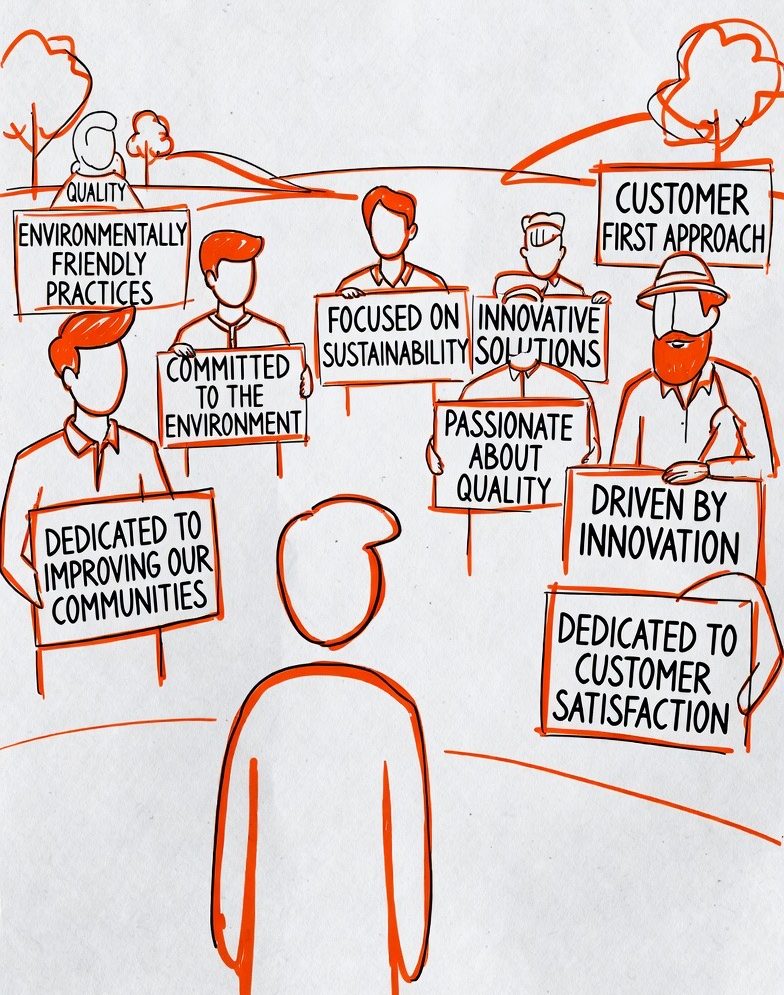
For fifteen years, Simon Sinek’s Start With Why has been the undisputed gospel of the world of corporate strategy. It was the perfect philosophy for a specific moment in history; a moment of economic abundance, cheap capital, and boundless optimism. It told us that commerce didn’t have to be dirty. It told us that selling software or sneakers could be a moral act. It allowed creative directors and CEOs to look in the mirror and see not merchants, but missionaries.
But I am here to tell you that the service is over. The lights are coming back on. And in the harsh glare of 2026, Sinek’s Golden Circle looks less like a compass and more like a target we missed entirely.
To understand why the “Why” is dying, you have to understand the economic hallucination that birthed it.
The dominance of purpose-driven marketing was a Zero-Interest Rate Phenomenon (ZIRP). It was a luxury belief system subsidized by an era of unprecedentedly cheap money. From roughly 2010 to 2021, the global economy was awash in venture capital and optimism. When money is free, businesses do not have to be profitable immediately; they just have to be promising. They have to tell a good story.
In this environment, the “What” — the actual product, its specifications, its margins, its utility — became secondary. The “What” was boring. The “What” was for accountants. The “Why” was where the valuation multiplier lived.
We saw the rise of the direct-to-consumer unicorn, a species of company that was 10% product and 90% narrative. We bought toothbrushes that promised to disrupt oral hygiene. We bought luggage that promised to revolutionize the concept of travel. We bought mattresses that were vehicles for wellness and better mornings.
Every startup I saw in those years followed the same script. The founders were starting a movement. The pitch deck slide with the concentric circles promised that if we could just nail the belief system, the product would sell itself.
And for a while, it worked. It worked because the consumer was living in the same hallucination.
When you have disposable income, high job security, and a general sense that the future is bright, you have the luxury of shopping for identity. You can afford to care about a brand’s stance on social issues. You can afford to pay a 40% premium for a mission-driven detergent because the purchase makes you feel like a participant in a better world. You are shopping at the very top of Maslow’s Hierarchy of Needs—Self-Actualization.
But ideologies, like markets, have cycles. And the cycle has turned.
Walk through a grocery store in 2026. Watch the behavior of a consumer standing in the laundry aisle. They are not looking for Downy’s big Bolshevik pivot. They are looking for a price per ounce. They are picking up the bottle, turning it over, and reading the back panel with a level of scrutiny that borders on forensic.
They are not asking, “What does this brand believe?”
They are asking, “Is this going to work?” and “Why is it twenty-two dollars?”
We are living through a Great Sobering. The post-pandemic inflation, the stagnation of real wages, and the creeping nihilism of the rot economy have fundamentally rewired the consumer brain. The optimism that fueled the “Start With Why” era has largely evaporated. The average consumer is operating at the level of Physiological and Safety needs.
In a survival economy, “Purpose” is a distraction. “Why” is a luxury. “What” is a necessity.
We spent a decade ignoring the “What” because we thought it was beneath us. We thought specs were cold and impersonal. We thought features were commodities. In doing so, we created a massive utility deficit in the market. We allowed brands to become bloated with storytelling while their core products atrophied.
We taught consumers that “brand” was a synonym for “fluff.” We taught them that if a company is talking about its values, it’s probably trying to distract you from its price tag.
The Golden Circle argues that people don’t buy what you do; they buy why you do it.
I am arguing that this is objectively false.
If I have a headache, I do not buy Tylenol because I believe in Johnson & Johnson’s corporate mission to change the trajectory of health for humanity. I buy Tylenol because it contains 500 milligrams of acetaminophen, a chemical compound that inhibits the production of prostaglandins in my brain. I buy the “What.”
If I am hiring a cloud storage provider, I do not care about their founder’s “Why.” I care about their uptime service-level agreement, their encryption standards, and their cost per terabyte. I am buying the “What.”
The reliance on “Why” has become a crutch for lazy strategy. It is easier to write a manifesto than it is to engineer a superior product. It is easier to talk about community than it is to fix a broken supply chain. It is easier to film a tear-jerking commercial than it is to lower your price point without sacrificing quality.
For the last ten years, we have been rewarding brands for their rhetoric. But the future is about rewarding them for their reality.
As we strip away the layers of the last decade’s marketing dogma, we find something uncomfortable underneath. We find that many of these purpose-driven brands are actually quite hollow. They are narrative shells wrapped around mediocre commodities. And the consumer, sharpened by economic pressure and exhausted by corporate hypocrisy, has learned to tap on the shell and listen for the echo.
They are hearing it loud and clear.
The danger for modern brands isn’t that they don’t have a noble enough purpose. The danger is that they have forgotten how to be useful. They have forgotten that before you can change the world, you have to be able to get the grass stain out of a soccer jersey. You have to be able to keep the wi-fi on during a storm. You have to be able to deliver the package on the day you said you would.
The “Why” was a beautiful dream. But people are awake now. And there is work to be done. We need to stop looking at the center of the Golden Circle and start looking at the edges, where the rubber actually meets the road.
We need to talk about the “What.”
To truly understand the insolence of the “Start With Why” movement, you have to look at where it breeds. It does not breed in the hardware store. It does not breed in the mechanic’s bay. It breeds in the rarefied air of lifestyle brands—specifically, the apparel sector, where the gap between the utility of the product and the palaver of the marketing is widest.
Take, for instance, the recent launch of Tiger Woods’ new venture, Sun Day Red.
Here we have a line of polyester blends and quarter-zips, the uniform of the 6-handicap golfer and the Admiral’s Lounge frequenter. A pragmatic assessment of the “What” reveals a perfectly adequate, albeit expensive, piece of moisture-wicking fabric. But the brand cannot simply sell a shirt at that price point. It must sell a catechism.
The marketing copy speaks of some grandiose, unobtainable hunt. It waxes poetic about a “Rule No. 1” philosophy, treating the act of wearing a $120 polo as a spiritual exercise in dominance and resilience. It is an exercise in gilding the lily so aggressively that the lily itself is suffocated.
This is the cognitive dissonance of the aisle. The brand is asking the consumer to engage in a profound, existential dialogue about greatness while they are simply trying to find a size large that hides a burgeoning gut.
It feels like the brand is trying to baptize a transaction to make it feel less like commerce.
And this is where the class divide reveals itself. “Purpose” is a playground for the patrician. Prioritizing the soul of a brand over its function is a behavior reserved for those who have already secured their survival.
We see this same sleight of hand—happening in my own backyard of higher education.
For decades, universities have sold the “Why.” We sell “Global Citizenship.” We sell “Holistic Growth.” We draft glossy brochures filled with students gazing thoughtfully at horizons, promising that the tuition check is an investment in their very soul.
But look at the eighteen-year-old sitting across the desk in the admissions office. They are not looking for sudden enlightenment.
They are terrified. They are staring down the barrel of a volatile economy, facing the prospect of graduating into a world where homeownership is a chimeric dream. To them, our high-minded rhetoric about purpose sounds less like a promise and more like the insincere talk of a pious class that has never had to worry about making rent.
The “Why” can no longer do the heavy lifting because the floorboards are rotting out from under the customer. When a student asks, “What will I get for this degree?” and we answer with “A sense of belonging to a global community,” we are effectively handing a drowning man a painting of a life raft.
It is sanctimonious. Tone deaf. And in 2026, it is a strategy that is rapidly running out of road.
We are witnessing a sharp pivot in consumer desire, a shift away from the abstract and toward the granular. We are seeing a fetishization of the spec sheet.
You see it most clearly in the boring categories. Look at the humble white t-shirt. Ten years ago, the selling point was softness or the vague promise of California cool. Today, if you go to the corners of the internet where Gen Z men discuss fashion, they are not talking about the brand’s ethos. They are arguing, with the intensity of scholars, about GSM.
They want to know the heft of the cotton. They want to know if it is loop-wheeled. They want the brass tacks.
They are treating a Hanes beefy tee like it is a piece of industrial machinery.
Why is this clinical aesthetic winning? Why are we trading poetry for taxonomy?
Because in a world of deepfakes, AI-generated influencers, and corporate gaslighting, the “What” feels like the only thing that is real. A number is verifiable. A material weight is corporeal. You can touch it. You can weigh it. You can measure it.
The aesthetic of the “What” is not beautiful in the traditional sense. It is utilitarian. It is the aesthetic of the label on a prescription bottle or the stamped metal plate on a generator. It signals safety. It signals that this object was engineered, not just ideated.
When a brand strips away the ornamentation and simply presents the object in its raw, technical glory, it triggers a different part of the brain. It bypasses the skepticism we have developed for emotional manipulation and hits the logic center.
It says: I am not here to be your friend. I am not here to save the whales. I am here to cover your torso in 280 GSM cotton so you do not freeze. And right now, that honest, boring, mechanical promise feels like the most radical thing a brand can say.
The barrier to entry for a mission statement is effectively zero. Any copywriter with a steady internet connection and a working knowledge of emotive language can draft a compelling narrative about integrity or community in a single afternoon. This ease of creation is precisely why the modern consumer views such narratives with deep suspicion. They understand that talk is cheap, and in a digital ecosystem flooded with synthetic content, it has never been cheaper.
We must therefore look at trust through the lens of falsifiability.
A claim about a brand’s soul or its why is amorphous. It resists testing. It floats in a nebulous space of subjective emotional resonance where objective truth is largely irrelevant. A company can claim to care about the planet while shipping plastic widgets across three oceans, and the dissonance is easily waved away with a PR statement about long-term goals. The consumer cannot drag that claim into a lab and prove it false.
A claim about the “What,” however, exposes the brand to immediate risk. It exists in the physical world. It invites the consumer to act as an auditor.
If a jacket claims to be waterproof to 20,000 millimeters, that claim can be tested with a garden hose. If a software provider promises 99.9% uptime, that promise can be measured against a server log. If a protein bar lists twenty grams of protein, a simple chemical analysis can confirm or deny the fact.
The consumer intuitively understands this distinction in risk profiles. They know that a brand faces very little legal jeopardy for failing to inspire the human spirit. They may roll their eyes, but they cannot sue for a breach of philosophy. Conversely, they know that a brand faces a class-action lawsuit or a regulatory recall for lying about the ingredients in a supplement.
Trust, in this context, is a product of exposure. We tend to trust the claim that carries a penalty for being false.
This dynamic explains the sudden pivot toward radical transparency we are seeing in high-performing sectors. Brands are publishing their supply chain maps, factory audits, and pricing structures. They are doing this because the “What” is the only shield they have left against a cynical market. By laying the raw data on the table, they are signaling that they have nothing to hide.
The “Why” asks the consumer to have faith. The “What” gives the consumer evidence. In an era where faith in institutions is at an all-time low, evidence is the only currency that holds its value.
The manifesto has had its run. The beautifully typeset paragraphs about changing the world now sit on corporate websites like artifacts from a bygone civilization. They gather dust, ignored by a customer base that has ceased to look for salvation in the checkout aisle.
We must therefore pivot our resources. The “About Us” page, once the crown jewel of the brand strategy, is now largely irrelevant. The Product Detail Page is the new battlefield. While the creative directors are busy polishing the brand story, the pragmatists are obsessing over the bullet points that describe the battery life and the warranty.
This requires a distinct kind of confidence. To let a product stand naked in the market, stripped of its emotional armor, is a terrifying prospect for a traditional marketer. It demands that the engineering be so sound that it requires no adjective-laden cover fire from the advertising department.
I call this the Utility Aesthetic. It prioritizes the object over the narrative. It assumes that the customer is intelligent enough to understand the value of a well-made thing without a lecture on its spiritual significance.
Simon Sinek asked us to look at the center of the circle for meaning. He missed the point. Meaning is found at the edge, where the tool meets the hand. The most profound thing a brand can offer a human being is a solution to a problem that works so well the problem ceases to exist.
We must abandon the pulpit.
Start with the “What.”
 Pragmatic Revival
Leave a comment