
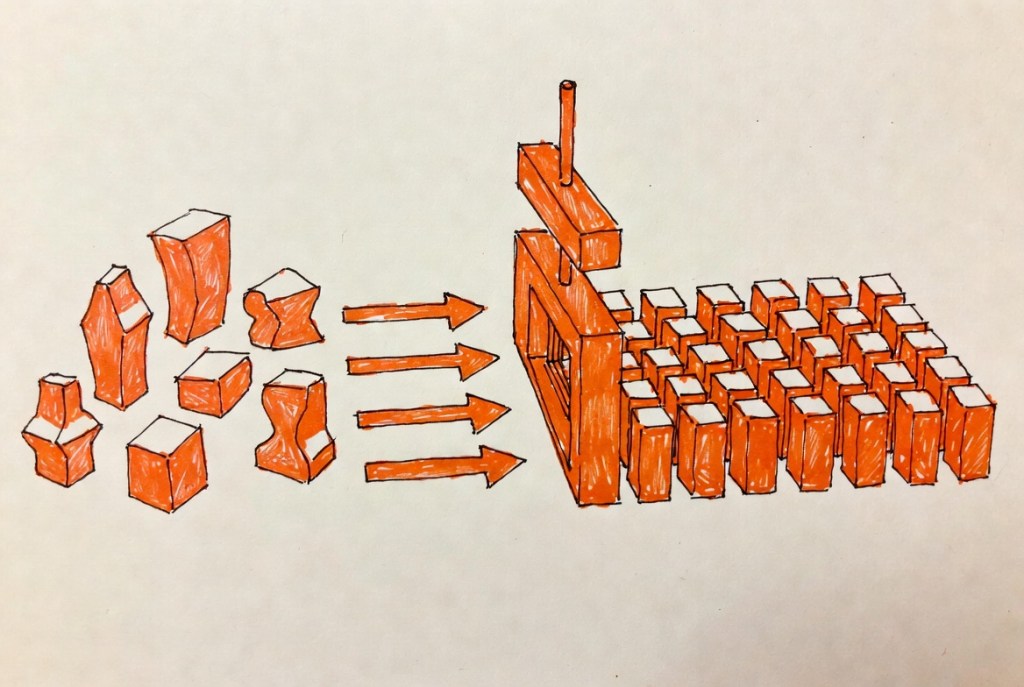
Gather ten strategic plans from ten different regional universities. Lay them side-by-side on a conference table. The physical artifacts themselves tell a story of sheer compliance. Look closely at the typography, the paper stock, the photography, and the core pillars, and you’ll find an unyielding repetition. Glossy covers invariably feature a diverse cluster of students gathered around a single laptop under a mature oak tree, or a professor pointing thoughtfully at a whiteboard in a pristine laboratory. Inside, the language settles into a familiar, measured rhythm. You’ll read about “transformative experiences” across hundreds of pages. You’ll find a commitment to “innovative leadership” repeated in nearly every presidential letter, alongside a dedication to “academic excellence” stated as if it were a bold new frontier.
A chief marketing officer could swap the text of a university in Ohio with a college in Oregon, and the respective boards of trustees would likely approve the documents without noticing. The words function as a protective sealant.
Marketers often blame this repetition on lazy copywriting or uninspired design agencies, assuming a fresh creative brief will cure the malaise. In truth, the identical language is a symptom of a much deeper reflex rooted in organizational behavior. The words simply reflect the structure.
In 1983, sociologists Paul DiMaggio and Walter Powell published a paper observing this exact phenomenon. They wanted to understand why organizations operating in the same field eventually grow to look remarkably similar—a structural homogenization they called “institutional isomorphism.” In the early, chaotic days of an industry, organizations take wildly different shapes to survive. They experiment. They diverge. But once a field becomes firmly established and highly regulated, the driving force behind executive decision-making shifts entirely. Organizations stop innovating for the sake of efficiency and begin copying one another in a desperate search for legitimacy.
When an environment turns unpredictable, the safest move for a governing board is to look at the perceived leader in the space and mimic their structure. The anxiety of falling behind creates a powerful gravitational pull toward the mean.
In American higher education, the pursuit of legitimacy trades on a highly specific currency: the U.S. News & World Report rankings, a framework heavily weighted toward the metrics of R1 research institutions. Regional public universities and mid-sized private colleges currently feel the immense pressure of shifting demographics and shrinking high school graduating classes. In response to that existential anxiety, leadership teams look up the hierarchy to the massive state flagship or the elite private research university. They study the flagship operations and attempt to absorb its characteristics.
These regional schools begin pushing for increased faculty research output, often at the direct expense of their historical teaching missions. They pour limited marketing resources into recruiting applicants from distant states just to appear more globally relevant. They adjust application funnels to artificially suppress acceptance rates, projecting an aura of exclusivity. A regional university—originally built to provide localized access and straightforward career mobility for the surrounding county—begins engineering its data to resemble an exclusive global research hub.
This mimetic behavior creates a severe operational misalignment, actively destroying the unique value proposition of a regional brand. Budget dollars slowly bleed away from frontline student advising, financial aid counseling, and frictionless transfer pathways. Instead, funds pool around vanity research initiatives and glossy national advertising campaigns that fail to resonate with the core local audience. The institution simply becomes a more expensive, less recognizable copy of a dominant competitor. For a regional university facing a shrinking market, copying the prestige model is a definitive path to operational failure.
The Trap of Institutional Isomorphism
The projection appears on a high-definition screen at the far end of the boardroom table: a line graph tracking high school graduation rates across the state, dropping precipitously as it approaches the end of the decade. The demographic cliff, born from declining birth rates after the 2008 financial crisis, is no longer a forecast. It is here.
Faced with this steep decline in traditional eighteen-year-old applicants, university cabinets experience a profound, collective panic. When the environment becomes this unstable, governing boards rarely reward radical experimentation. The pressure of survival triggers mimetic isomorphism. Organizations look to the most prominent entities in their field and attempt to replicate them, assuming elite universities possess a protective formula for enduring the crisis.
The compass for this replication is almost universally the annual U.S. News ranking. This list operates as the supreme arbiter of academic prestige, guiding the decisions of presidents, provosts, and marketing directors. But a close examination of the underlying methodology reveals a highly specific definition of success—one that heavily favors the structural realities of R1 institutions, characterized by massive, well-funded research operations and global reach.
The ranking system fundamentally rewards accumulated wealth and intentional exclusivity. It measures the size of the endowment, faculty compensation packages, and historical alumni giving patterns. Crucially, the algorithm rewards universities for turning people away. A lower acceptance rate directly signals higher desirability within the mathematical model, creating a perverse incentive to solicit thousands of applications from students who have no realistic chance of admission simply to inflate the denominator.
A significant portion of the ranking methodology also relies on peer assessment surveys, where presidents and provosts rank competitors based on perceived reputation. Within academic circles, reputation is largely driven by faculty publishing volume and massive federal grant expenditures. The system naturally favors institutions that keep their professors secured in laboratories and graduate seminars, far removed from introductory undergraduate courses.
Applying this framework to a regional institution creates severe organizational distortion. A regional public university often began as a normal school or an agricultural college, established a century ago to fulfill an urgent, localized civic need. Its foundational mandate is access. The institution exists to provide a reliable bridge to the middle class for first-generation students, commuting adults, and regional professionals seeking advanced skills. The very purpose of the campus is to accept, retain, and educate the surrounding community.
When leadership attempts to engineer a regional college’s data to fit the R1 mold, the operational absurdity becomes impossible to ignore. An institution built to educate the local workforce starts diverting funds to hire specialized recruiters dedicated to finding applicants a thousand miles away, hoping to manipulate geographic diversity metrics. A campus designed to teach practical, applied skills pressures its teaching faculty to prioritize academic publishing, slowly detaching the curriculum from the immediate demands of the regional economy. Tuition goes up to artificially signal higher quality, while the rejection rate is hiked to appear elite. The administration prioritizes luxury residence halls to attract wealthy traditional students while ignoring the lack of evening advising hours for the working adults who actually live in the county.
The institution fundamentally turns its back on the exact population it was chartered to serve. The pursuit of an arbitrary ranking transforms a vital engine of local economic mobility into a hollow, inefficient imitation of an exclusive research hub.
When Prestige Cannibalizes Operations
The pursuit of national prestige requires massive amounts of capital. When a regional institution starts chasing the metrics of a research powerhouse, the administrative ledger undergoes a quiet, devastating transformation. Financial resources systematically flow away from the unglamorous work of frontline student success.
A transfer student submits transcripts from a local community college and waits two months for a proper evaluation because the registrar lacks the budget for a full-time evaluator to process the backlog. In that exact same fiscal quarter, the university authorizes a massive expenditure for a specialized recruitment team to fly to wealthy suburbs across the country, seeking out-of-state applicants who might marginally elevate the geographic diversity metrics of the incoming class.
This reallocation cuts deep into academic departments. A tenured faculty line is approved for a specialized researcher who will spend most of the week in a lab and teach a single graduate seminar each year. To fund this expensive new position, the university reduces the number of academic advisors available to the general undergraduate population. The ratio of students to advisors swells to an unmanageable level, and the students who most need guidance regarding course selection and career planning cannot secure a thirty-minute appointment. The pursuit of an elite ranking actively starves the mechanisms designed to help regular students navigate the campus.
This structural shift gradually builds an invisible wall around the university. As the institution attempts to project the aura of an exclusive ivory tower, it alienates its foundational demographic: adult learners completing unfinished degrees, Pell-eligible students navigating federal grants, and local commuters balancing coursework with full-time employment. A commuter student logs into a newly redesigned web portal and finds nothing but imagery of residential life and international study abroad programs. Marketing materials highlight a multi-million dollar campus recreation center featuring a rock-climbing wall and a lazy river. The thirty-year-old working parent looking for evening classes and reliable childcare feels entirely unseen. The institution adopts a tone of exclusionary prestige, communicating to the local population that the campus is no longer built for their daily realities.
The final consequence is a brutal positioning failure in the wider marketplace. A regional university operates with a fraction of the flagship’s financial endowment, entrenched research infrastructure, massive federal grants, and sprawling alumni networks. It cannot possibly overtake the flagship in the established metrics of national prestige. By attempting to play the exact same game, the regional university inadvertently positions itself as a secondary choice.
Prospective students evaluate the two options and see the same basic promises, the same emphasis on faculty research, and the same visual identity. The regional school simply appears as a slightly less impressive version of the dominant competitor. Lacking massive state subsidies and deep donor pockets, it relies heavily on tuition dollars to fund these new prestige initiatives—frequently making the regional campus more expensive to attend than the flagship, while offering a lower perceived value. The administration willingly discards a unique identity as an agile, locally focused engine of economic mobility to become a permanent runner-up in a competition it fundamentally lacks the resources to win.
The Blueprint for Operational Courage
Escaping the structural confines of mimetic behavior requires a fundamental shift in executive behavior. A university cabinet must stop operating from a posture of defensive preservation. True differentiation demands rigorous structural execution. Leadership must dismantle the existing operational machinery and rebuild it around a singular, highly specific regional mandate. This process requires a precise blueprint of operational courage, executed without hesitation across every layer of the campus infrastructure.
Strategic positioning demands the courage of deliberate abandonment. When a governing board attempts to serve every conceivable demographic, the operational model becomes bloated and highly inefficient. A regional institution must identify exactly what it will cease doing to reclaim its regional dominance. The administration must willingly sunset the costly pursuit of traditional eighteen-year-old students living three states away. It must stop authorizing out-of-state travel for admissions counselors—eliminating the rental cars, hotel stays, and stacks of glossy mailers shipped to distant zip codes—and redirect that budget entirely toward a localized strength.
For example, the institution might resolve to become the premier destination for eight-week accelerated degree completion within a hundred-mile radius. Executing this shift requires tearing down the traditional sixteen-week semester model. The registrar rewrites the academic calendar, discarding decades of entrenched scheduling practices. Faculty rebuild syllabi to accommodate an intense, compressed learning format. The financial aid office restructures disbursement schedules to align with the rapid terms. The university sacrifices the prestige of a traditional academic calendar to own a highly functional product built precisely for the working adult. This strategy of sacrifice forces the university to do one thing exceptionally well by choosing to ignore a dozen other possibilities.
Standard strategic plans fail because they are universally additive. A presidential task force gathers in a retreat center, fills flip charts with sticky notes, and compiles a massive catalog of vague promises attempting to attract every living human with a high school diploma. To build a resilient regional identity, the cabinet must do the exact opposite: clearly define the anti-persona. They must write down exactly who the university does not serve.
During a cabinet meeting, the president must state clearly that the university does not exist for the student seeking a leisurely, resort-style campus experience. It does not cater to those looking for a country club environment, sprawling fraternity rows, or massive recreational complexes. And the administration must publicly acknowledge this reality. A compelling brand actively repels the wrong fit. When a university openly declares that its campus lacks luxury amenities and instead offers rigorous career preparation, it filters out applicants who would inevitably transfer after a single semester. Simultaneously, this stark honesty acts as a powerful magnet. The adult learner balancing two jobs and a family hears this message and recognizes an institution that respects their time. The clarity of exclusion creates deep, enduring loyalty among the intended audience.
A university budget serves as the most accurate reflection of its true identity. If the administration claims the new strategic position is the primary engine of regional economic mobility, the financial ledger must reflect that exact priority. A brand strategy must dictate the back-office workflow down to the smallest line item. A cabinet cannot declare a commitment to working professionals while maintaining a financial aid office that turns off the lights at four in the afternoon.
Leadership must reallocate funds away from traditional markers of academic prestige. The provost freezes hiring for esoteric faculty research positions and instead hires a small army of highly trained career counselors. The administration funds a frictionless transfer pathway, building digital infrastructure that evaluates community college transcripts in twenty-four hours rather than six weeks. The physical campus master plan pauses the construction of an Olympic-sized swimming pool to fund a massive expansion of high-speed wireless internet in the commuter parking lots.
Every dollar spent must validate the stated mission, acting as a measurable proof point. A massive marketing campaign promising personalized attention falls entirely flat if the student-to-advisor ratio remains at five hundred to one. The operational ledger must solve the ratio before the marketing team buys the billboard.
When operational execution flawlessly matches the strategic promise, the university no longer needs to artificially manufacture an identity. It simply becomes the indispensable center of its regional economy. The budget itself becomes the ultimate marketing material, proving the value of the credential through the sheer force of operational focus.
Survival Dictates Divergence
The landscape of higher education has fundamentally shifted beneath the feet of administrators. The traditional undergraduate market continues to evaporate with each passing admission cycle. The new majority of students demands verifiable economic mobility rather than a vague promise of a transformative campus experience. In this shrinking, highly scrutinized market, playing it safe carries the ultimate operational risk.
A regional university lacking a massive endowment simply cannot afford to operate as a generic, secondary option. A middle-tier institution attempting to replicate the structure of an elite research hub will inevitably bleed its financial reserves dry while alienating the specific local population that justifies its very existence. The imitation drains the budget and dilutes the academic product until the university stands for absolutely nothing at all.
Survival demands a radical break from the collective herd. A regional campus must look inward, examining the specific, unglamorous needs of its immediate geographic radius. Leadership must possess the operational fortitude to build a highly focused, deeply pragmatic product designed specifically for the people working and living within commuting distance. They must fund the essential mechanics of transfer credit articulation, adult degree completion, and direct workforce integration.
Executing a divergent, highly specific regional strategy represents far more than a simple creative exercise. This level of disciplined focus functions as the fundamental architecture of institutional endurance. The universities that survive the coming decade will abandon the frantic pursuit of arbitrary prestige. They will stop looking across the state for validation and start looking directly at their own surrounding counties. The future belongs to the institutions brave enough to embrace their true operational mandate, leaving the crowded sea of sameness behind to stand entirely alone.


Leave a comment